












-
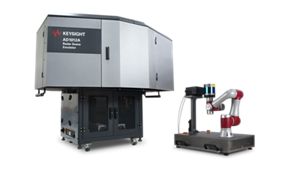
Automotive Radar Test Solutions
Scalable radar target emulation for all development stages


-
Lidar Scene Emulator
Compact emulation of driving scenes with distance and reflectivity control


Automotive Radar Test Solutions
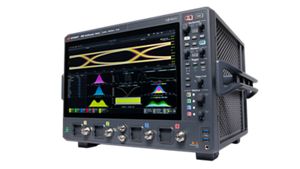
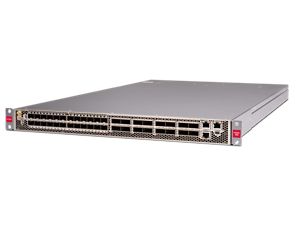
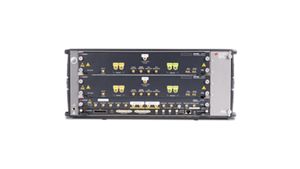
Keysight automotive radar test solutions help you validate radar sensors and modules in safe, controllable, and repeatable lab conditions. The portfolio includes radar target simulation and full‑scene emulation, plus Tx/Rx verification, conformance, OTA characterization, and interference/immunity testing across key automotive radar bands. Choose the solution that is right for your application – from benchtop verification to high‑density multi‑target scenarios – to accelerate validation and improve reliability. Need help selecting? Check out the resources below.

Lidar Scene Emulator
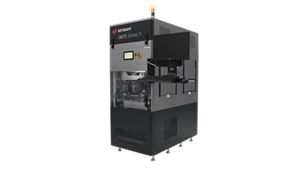
The Keysight lidar scene emulator brings real-world driving scenarios into the lab with precise control over distance and reflectivity in a compact, repeatable setup. Validate lidar sensors for autonomous driving and driver-assistance systems without the risks and constraints of on-road testing. Want to learn more about this solution? Explore the resources below.

Bring real-world radar complexity into the lab
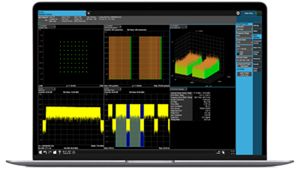
Radar scene emulation enables repeatable, controlled validation of radar perception and functions in the lab. Explore a curated set of Radar Scene Emulator (RSE) demos that progress from core radar functions to perception and ADAS/AD testing. Read the app note to explore how multipath effects can be emulated by synchronizing reflections and validated against real radar measurements.
Find Compatible Software and Accessories for your Autonomous Drive Test Solution
Choose from a wide variety of validation, compliance, and scenario replay software, or accessories like radar target simulators, lidar calibration kits, high-performance RF cables, GNSS antennas, and more.
Services and support
Innovate at speed with curated support plans and prioritized response and turn-around times.
Get predictable, lease-based subscriptions and full lifecycle management solutions—so you reach your business goals faster.
Experience elevated service as a KeysightCare subscriber to get committed technical response and more.
Ensure your test system performs to specification and meets local and global standards.
Make measurements quickly with in-house, instructor-led training, and eLearning.
Download Keysight software or update your software to the newest version.
Frequently Asked Questions
Choosing the right autonomous drive testing solution depends on the sensor technology, vehicle platform, and validation stage. Radar-focused applications may require radar target simulation, full-scene emulation, Tx/Rx verification, OTA characterization, conformance testing, and interference / immunity testing across key automotive radar bands.
For lidar-based perception systems, a lidar scene emulator can bring real-world driving scenarios into the lab with controlled distance and reflectivity. The right solution should support the scenarios you need to validate, from benchtop verification to high-density multi-target testing, while helping improve validation speed and reliability.
Autonomous driving systems require a combination of sensor, perception, scenario, conformance, and system-level validation tests. Radar sensors and modules may need target simulation, full-scene emulation, transmitter and receiver verification, OTA characterization, interference / immunity testing, and conformance validation.
Lidar systems may require scene emulation with precise control over distance and reflectivity to verify how the sensor responds to realistic driving scenes. These controlled tests complement on-road testing by allowing engineers to safely repeat critical scenarios, isolate variables, and evaluate ADAS / AV behavior in the lab.
Key metrics include perception accuracy, decision-making latency, communication reliability, system resilience, repeatability, and safe operation under different conditions. For radar validation, teams may also evaluate transmitter and receiver performance, target response, OTA behavior, interference immunity, and conformance results.
For lidar validation, important measurements include distance response, reflectivity response, scene repeatability, and consistent sensor behavior across controlled scenarios. These KPIs help engineers understand whether ADAS and autonomous driving systems can reliably perceive their surroundings and support safe vehicle operation.
Autonomous vehicles are tested under real-world conditions by recreating critical driving scenarios in safe, controllable, and repeatable lab environments, then complementing those results with field or on-road testing as needed. Radar target simulation and full-scene emulation help validate how sensors respond to objects, motion, distance, and complex multi-target conditions without relying only on public-road testing.
For lidar, scene emulation enables engineers to control distance and reflectivity so they can reproduce driving scenarios consistently. This approach helps teams evaluate edge cases, failure modes, and hazardous situations while reducing the risk, cost, and variability of real-world road testing.
Autonomous drive testing should support the conformance, compliance, and safety validation needs of the sensor or system being developed. For automotive radar, this can include conformance testing, OTA characterization, Tx/Rx verification, and interference / immunity testing to confirm that radar sensors and modules perform correctly under defined test conditions.
At the vehicle and system level, safety validation focuses on whether ADAS / AV functions can perceive the environment, respond to scenarios, and operate reliably in controlled and repeatable conditions. Calibration and support services also help ensure that the test system performs to specification and meets applicable local and global standards.
Autonomous drive testing can be integrated into development workflows by using repeatable lab scenarios to validate sensors, modules, and ADAS / AV functions as hardware and software evolve. Scenario replay software, radar target emulation, lidar scene emulation, calibration tools, and automated test execution help engineers rerun conditions after design changes and compare results consistently.
In validation workflows, repeatable testing helps teams isolate variables, track improvements or regressions, and progress from benchtop verification to more complex multi-target or full-scene scenarios. This supports a more scalable approach to autonomous drive development than relying solely on manual testing or road miles.