












-
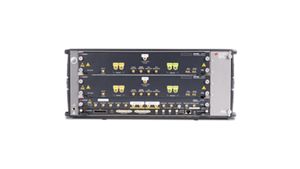
Vector Signal Generators
Stimulate your device or system with fundamental to complex wideband signals

-
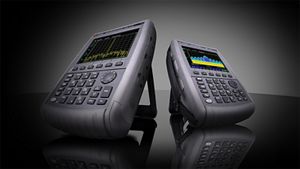
Analog Signal Generators
Discover our analog sources for general-purpose to metrology-grade signal generation
-
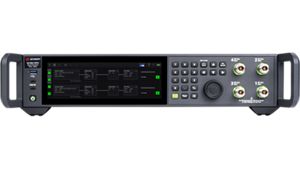
Frequency Synthesizers
Explore our compact, pure frequency synthesizers for RF testing

-
Agile Signal Generators
Accurately simulate complex signal scenarios for testing specific protocols
-
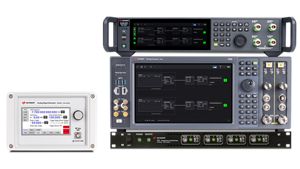
Modular Signal Generators
Scale your system with compact multichannel signal generation


Vector Signal Generators
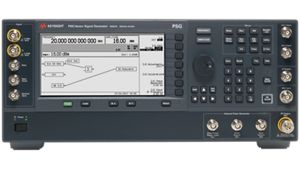
Keysight vector signal generators enable you to stimulate your device or system under test using complex, digitally modulated, realistic signals with high signal integrity. When paired with our signal generation software, you can perform rapid, accurate tests with predefined, standards-based waveforms for cellular communications like 5G New Radio (NR), wireless connectivity like wireless local area network (WLAN) 802.11, and navigation solutions like global navigation satellite systems (GNSS). Select the signal generator performance you need based on maximum frequency, bandwidth, and channels, as well as phase noise. Explore our range of models from Essential to Pro performance grades to find the one that is right for your application.

Essential

Starting from
Maximum frequency

Expert
Starting from
Maximum frequency

Pro
Starting from
Analog Signal Generators
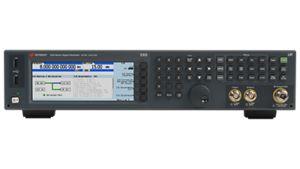
Keysight analog signal generators deliver low-phase-noise signals with precise frequency control, flexible configurations, and fast switching speeds. Select the analog signal generator performance level you need based on frequency, max channels, phase noise, and output power. Explore our wide range of models from Essential to Pro performance levels to find the one that is right for your application.

Essential
Starting from
Maximum frequency

Expert
Starting from
Maximum frequency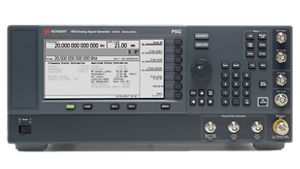

Pro
Starting from
Maximum frequencyFrequency Synthesizers
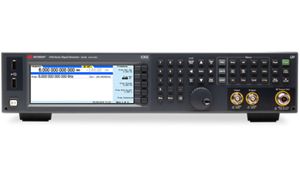
The Keysight FS Frequency Synthesizers are the FS1- and FS2-classes, which include the AP4001-AP4022A Frequency Synthesizers. They provide frequency synthesizers provide fast switching speeds, low phase noise, and high signal quality for a wide range of signals with precise frequency control. With single-channel and multichannel options and a variety of form factors available, our frequency synthesizers offer a scaled-down, affordable, compact option when the higher-level modulation capabilities of a signal generator are not required. Their compact size allows you to easily integrate them into your test system for various applications, including wireless communications, radar, electronic warfare, and quantum computing. Select the frequency synthesizer performance level you need based on max frequency, number of phase-coherent channels, phase noise, and switching frequency.

Agile Signal Generators
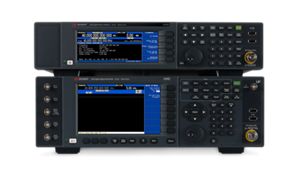
The Keysight agile signal generators simulate complex signal environments with an arbitrary waveform generator for testing specific protocols or unique communication formats for radar, electromagnetic spectrum operations (EMSO), and antenna testing. Its rapid frequency, amplitude, and phase-switching capabilities allow for accurate emulation of multi-threat scenarios. Choose one of our popular configurations or configure one specific to your application.

Modular Signal Generators
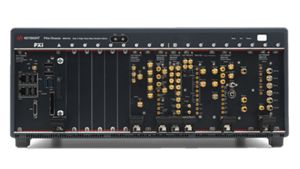
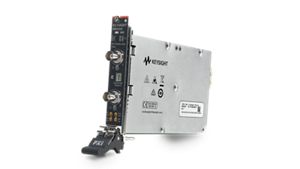
Keysight modular analog and vector signal generators are built for applications that require multichannel measurement capabilities, measurement speed, and a small footprint. They provide you with the scalability and flexibility needed to create test systems with a shared processor, chassis, and other modular instruments. With models ranging from 6 GHz to 44 GHz with varying performance levels, select the modular signal generator that is right for your application.


Find the vector signal generator for your application in minutes
Find compatible software and accessories for your signal generator
Choose from a wide range of specialty software for the creation of complex test signals for various applications, general-purpose and waveform tools, or accessories like frequency extenders, cabling, calibration kits, and more.
Explore signal generator use cases
Signal generators support a wide range of applications, discover them all
Wireless Communication
How to Test RF Power Amplifiers with Digital Pre-Distortion
Evaluate power amplifier performance using a signal generator and signal analyzer with digital pre-distortion software.

Wireless Communications
How to Test 5G NR Base Station Receivers
Generate highly complex waveforms with a vector signal generator and signal generation software.

Wireless Communication
Generate an RF carrier signal using a metrology-grade signal generator.


Wireless Communication
How to Test GNSS Receiver Sensitivity
Emulate real-world global navigation satellite system (GNSS) transmitter scenarios from your bench.

Wireless Communication
Use a signal generator to automate the de-embedding and match-correction of test fixtures.
Services and support
Innovate at speed with curated support plans and prioritized response and turn-around times.
Get predictable, lease-based subscriptions and full lifecycle management solutions—so you reach your business goals faster.
Experience elevated service as a KeysightCare subscriber to get committed technical response and more.
Ensure your test system performs to specification and meets local and global standards.
Make measurements quickly with in-house, instructor-led training, and eLearning.
Download Keysight software or update your software to the newest version.
Frequently asked questions
Max frequency: The maximum frequency of a signal generator is critical because it indicates the highest frequency it can produce. This aspect is essential for ensuring compatibility with target applications. For instance, in wireless communications, radar, and 6G research, the signal generator must encompass the necessary frequency bands to accurately test and validate devices by simulating real-world conditions.
Modulation Bandwidth: Modulation bandwidth refers to the frequency range over which a signal can be effectively modulated to carry information in a communication system. Wider bandwidths are essential for testing modern communication systems, radar, and 6G applications, which require high data rates, complex modulation schemes, and wideband signals such as 5G NR, Wi-Fi 7, and ultra-wideband (UWB).
Number of channels: Multi-channel signal generators are essential for applications such as MIMO (multiple-input, multiple-output) testing, beamforming, radar simulations, and phase-coherent signal generation. Precise synchronization between channels is critical for accurate device characterization and system performance evaluation. For applications such as beamforming, the signal must be phase-coherent and time-aligned. For more information, please check out the following whitepaper.
Phase noise: Phase noise refers to the short-term, unwanted fluctuations in a signal’s phase, manifesting as jitter in the time domain and sideband noise in the frequency domain around the carrier signal. It is a crucial parameter in RF and microwave applications because high levels of phase noise can degrade signal integrity, modulation accuracy, and overall system performance in applications such as communication systems, radar, or any application requiring precise timing or synchronization.
Output power: The output power of an RF signal generator refers to the amount of RF energy delivered by an output port, measured in dBm (decibels relative to 1 milliwatt) or watts (W). It represents the strength of the RF signal that the generator produces. Key benefits of high output power include:
- Overcomes losses in test setups from cables, connectors, and attenuators.
- Extends the dynamic range of testing, where both weak and strong signals need to be accurately characterized.
- Improves the Signal-to-Noise Ratio by reducing noise influence and making measurements more precise. This assumes a constant noise floor.
- Tests high-power DUTs (Devices Under Test), including power amplifiers, antennas, and transmitters that require higher input power to function properly.
The difference between a vector signal generator and an analog signal generator lies in their capabilities and the types of signals they produce, catering to distinct testing and application needs in RF engineering.
An analog signal generator produces continuous RF signals with basic parameters, including frequency, amplitude, and phase modulation. It generates sine waves or other straightforward waveforms. While analog signal generators are typically simpler to operate, they cannot replicate the advanced digital modulation techniques utilized in modern communication systems.
In contrast, a vector signal generator can generate complex, digitally modulated RF signals mimicking real-world communication signals, such as those used in wireless standards like LTE, Wi-Fi, or 5G. Vector signal generators control both the amplitude and phase of the signal (hence "vector"), producing intricate waveforms with specific modulation types (e.g., QAM, PSK, OFDM) and can introduce impairments like noise or fading for realistic testing. This makes them essential for designing, testing, and troubleshooting modern digital communication systems.
RF signal generators have a broad range of applications across various industries, utilizing their capability to generate controlled radio frequency signals for testing, development, and operational purposes. Here are some key applications:
1. Telecommunications Testing: RF signal generators simulate signals to test communication equipment such as mobile phones, base stations, and satellite systems. They help evaluate receiver sensitivity, signal quality, and performance under various modulation schemes (e.g., 4G, 5G, Wi-Fi).
2. Electronics Development and Calibration: Engineers utilize RF signal generators to design and troubleshoot RF circuits, including amplifiers, mixers, and filters.
3. Wireless System Validation: In the development of wireless technologies (e.g., Bluetooth, Zigbee, IoT devices), signal generators produce complex modulated signals to assess system performance, interoperability, and compliance with industry standards.
4. Aerospace and Defense: RF signal generators simulate radar signals, electronic warfare scenarios, and communication links for testing radar systems, missile guidance, and military radios. They can introduce noise or interference to evaluate system robustness.
5. Automotive Industry: With the rise of connected vehicles, automotive radar (e.g., for adaptive cruise control) and vehicle-to-vehicle communication systems are tested with precise RF signals produced by signal generators.
In essence, RF signal generators are indispensable tools for simulating real-world RF environments. They enable the design, testing, and optimization of systems that rely on radio frequency technology across diverse sectors.