Here's the page we think you wanted.
See search results instead:
Choose a country or area to see content specific to your location
What are you looking for?
Suggested searches
No product matches found - System Exception
Matched content
-
-
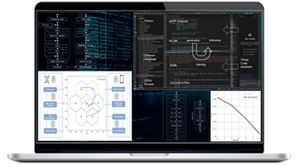
WirelessPro 3GPP AI Simulation Platform
WirelessPro empowers you to model, simulate, and analyze various aspects of 5G networks, 5G Advanced technologies, and future 6G wireless channels with unparalleled ease and accuracy.

-
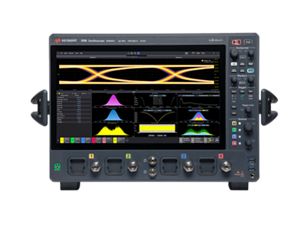
Digital Validation. Faster.
Get faster, clearer insights with our new multicore, 12-bit oscilloscope up to 33 GHz.
-
Discover Keysight AI Data Center Builder
Emulate every part of your data center infrastructure. Emulate Anything. Optimize Everything.

-
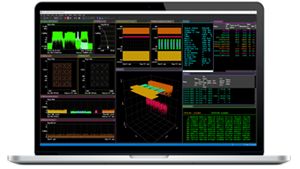
Simplify Complexity with Advanced Signal Analyzer Software
Accelerate signal analysis testing with Keysight’s VSA software. Visualize, demodulate, and troubleshoot with over 75+ signal standards with precision.
-
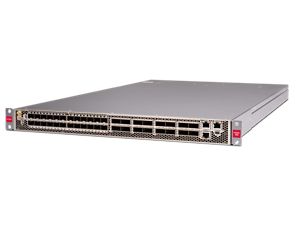
Introducing AI-Enhanced Packet Brokers
With extra memory and storage, these enhanced NPBs run Keysight's AI security and performance monitoring software and AI stack.
-
Precision In-Circuit Testing for Production
Achieve fast, accurate board-level testing with robust inline and offline ICT designed for modern manufacturing.
-
Accelerate Your Innovation Engine
Explore curated support plans, prioritized to keep you innovating at speed.

-
-
Stream 120 MHz I/Q Data to Your Laptop in the FieldPinpoint interference with post-processing spectrum management software in the lab.
 Now You Can Run Fast, Accurate Tests up to 192 kW
Our high-density ATE power supplies end trade-offs between test throughput and precision.
-
- Solutions
-
Explore engineer-authored content and a vast knowledge base with thousands of learning opportunities.
FeaturedKeysight Learn offers immersive content on topics of interest, including solutions, blogs, events, and more.
- Buy
-
Quick access to support related self-help tasks.
Additional content to support your product needs.
Do more with Keysight ServicesExplore services to accelerate every step of your innovation journey.


Optical Modulation Analyzers In-depth analysis of complex coherent optical signals
Model: N4391CKeysight XP7-class optical modulation analyzers include the N4391C.

no image available
prev
- Overview
- Options
- Accessories
- Software
- Support
XP7-class Optical Modulation Analyzer, DC to 110 GHz, 256 GSa/s
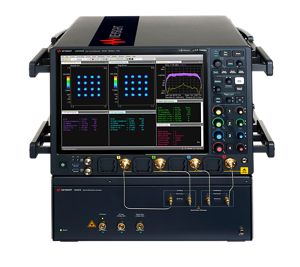
The N4391C optical modulation analyzer consists of a UXR real-time oscilloscope and a calibrated coherent optical receiver. Featuring full bandwidth upgradability, you can keep pace with your roadmap in the evolution of symbol rate classes for transceivers for 800 Gb/s, 1.2 Tb/s to 1.6 Tb/s used in the DCI (Data Center Interconnect). A new O-band solution enables coherent signal and device testing in the emerging 1.3 µm wavelength band for intra-datacenter interconnect use.

-
Frequency range
DC to 110 GHz
-
Maximum detectable symbol rate
220 Gbaud
-
Maximum record length
2 GSa
-
Maximum sample rate
256 GSa/s
-
Wavelength range options
1527.6 nm to 1620 nm, 1270 nm to 1340 nm
-
ADC resolution
10 bits

Ready for a quote
Find out what's included and explore available upgrade options from Keysight.
Highlights
The Keysight N4391C optical modulation analyzer (OMA) enables development of the coherent technologies required to advance performance in modern communication systems, such as those found in and connecting data centers. It consists of a Keysight UXR real-time oscilloscope and a calibrated coherent optical receiver. The N4391C builds on the UXR Series oscilloscope’s industry-leading noise and bandwidth performance and Keysight’s reliable and flexible vector signal analysis (VSA) software.
The most compact OMA solution of its class, the N4391C solves your coherent measurement problems, simplifies your test equipment decision, and protects your investment. It provides independent bandwidth choice for optical measurements using its own coherent receiver and electrical measurements directly at the oscilloscope's ports.
Complex modulated signals are common in long-distance transmission across dense wavelength division multiplexing links. However, newly proposed technologies for intra-data center interconnections use the coherent approach in the O-band, addressing higher data throughput with reduced power consumption. Keysight now provides OMA-coherent receivers for the O-band in addition to coherent receivers that work in the C-band and L-band.
Applications
The demand for higher transmission capability is pushing systems from 64 Gbaud to a proposed 124 Gbaud and even 200 Gbaud. The Keysight N4391C helps you keep pace with the demand for test equipment that can handle the symbol rate classes of transceivers for 800 Gb/s, 1.2 Tb/s, and 1.6 Tb/s, from early advanced research through the development phase.
Not only are symbol rates challenging, but modulation formats are getting more demanding because of higher-order quadrature amplitude modulation, which requires a step up in noise performance. The UXR oscilloscope’s industry-leading effective number of bits (ENOB) performance of 5.4 enables the N4391C to meet this challenge.
The Keysight N4391C provides operating bandwidth up to 110 GHz and myriad options for selecting modulation formats. Options include support for user-defined modulation formats, all at a high ENOB at the highest bandwidths.
Select from Two Frequency Bands
The N4391C comes in two configurations based on the connector type of the UXR oscilloscope: 1.85 mm and 1.0 mm. In either case, the optical coherent receiver has the same connector type as the oscilloscope. It possess internal hardware appropriate for the band, as well as calibration for the full band. It offers factory calibration to 70 GHz for C-band and O-band variants in the 1.85 mm configuration and 110 GHz in the 1.0 mm configuration. The OMA is field upgradable to maximum frequency.
A new feature in the N4391C OMA offering is independent and upgradable optical and electrical bandwidth licensing for the oscilloscope and the OMA itself. This scheme recognizes that the oscilloscope works in two use modes: as part of the OMA system where optical bandwidth is necessary and in standalone oscilloscope operation (optical coherent receiver disconnected) where electrical bandwidth is key. Because the modes are independent, you can enable what your teams need when they need it.
Each of the N4391C's configurations is upgradable to higher bandwidths for both electrical and optical use models. Configurations based on the 1.85 mm connector can be 40 GHz, 50 GHz, 59 GHz, or 70 GHz, upgradable in these steps to a maximum of 70 GHz. Configurations based on the 1.0 mm connector can be 40 GHz, 59 GHz, 70 GHz, 80 GHz, 100 GHz, or 110 GHz, upgradable in these steps to the maximum 110 GHz.

Services and support
Innovate at speed with curated support plans and prioritized response and turn-around times.
Get predictable, lease-based subscriptions and full lifecycle management solutions—so you reach your business goals faster.
Experience elevated service as a KeysightCare subscriber to get committed technical response and more.
Ensure your test system performs to specification and meets local and global standards.
Make measurements quickly with in-house, instructor-led training, and eLearning.
Download Keysight software or update your software to the newest version.
Start your quote by choosing a product
Select a configuration below