











- Overview
- All Models
- Support
Lasers for precise wavelength sweeps in optical test workflows
Keysight XP4-class tunable laser sources deliver high-resolution, narrow-linewidth optical signals, enabling precise characterization of wavelength-dependent performance in photonic components and systems. Designed for use in swept or stepped wavelength testing, our tunable lasers feature exceptional stability, low noise, and fine-tuning control — making them ideal for testing filters, modulators, and photonic integrated circuits. With wide tuning ranges and programmable sweep capability, you can easily integrate them into automated optical test systems. Select the tunable laser source you need based on the absolute wavelength accuracy and tunability you require. Choose one of our popular configurations or configure one specific to your application.
Narrow linewidth stability
Delivers ultra-clean optical output with low phase noise and high coherence, enabling precise testing of narrowband optical components.
Wide tuning range
Covers up to 200 nm within the 1260–1650 nm range, ideal for testing across and beyond common telecom bands.
Fast, linear sweeps
Programmable, high-speed wavelength sweeps reduce test time and improve wavelength-dependent loss and reflection measurements.
System integration
Designed for system-level use with SCPI command support and modular compatibility to streamline automated optical testing.
-
Absolute wavelength accuracy
±1.5 pm to ±10 pm
-
Tunability
Continuous sweep, Stepped
-
Signal to SSE ratio
80 dB/nm, 75 dB/nm
-
Maximum power
13 dBm to 19.4 dBm
Most popular configurations
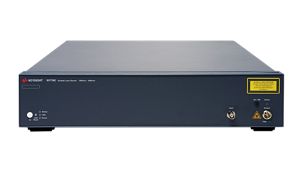

XP4-class Tunable Laser, high power and low SSE
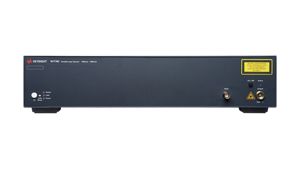

XP4-class Tunable Laser, high power and low SSE
XP4-class Tunable Laser, high power and lowest SSE
Services and support
Innovate at speed with curated support plans and prioritized response and turn-around times.
Get predictable, lease-based subscriptions and full lifecycle management solutions—so you reach your business goals faster.
Experience elevated service as a KeysightCare subscriber to get committed technical response and more.
Ensure your test system performs to specification and meets local and global standards.
Make measurements quickly with in-house, instructor-led training, and eLearning.
Download Keysight software or update your software to the newest version.
Frequently asked questions
A tunable laser is a precision optical source whose output wavelength can be adjusted over a defined spectral range, either continuously or in discrete steps. This ability to sweep across wavelengths makes tunable lasers indispensable for optical component testing, fiber optic communication systems, and advanced photonics research. In test environments, tunable lasers are used to probe the spectral response of devices such as optical filters, multiplexers/demultiplexers (MUX/DEMUX), waveguides, modulators, and photonic integrated circuits (PICs).
By tuning the laser across a broad range, often covering the C-band, L-band, and O-band, engineers can identify insertion loss, center wavelength, channel alignment, and spectral flatness of optical devices with high precision. Modern tunable lasers also support automated wavelength sweeps, fine resolution stepping, and triggered measurements, enabling high-throughput testing in both R&D labs and production test environments.
To choose the right tunable laser for precise fiber optic and photonic component testing, focus on the specifications that directly impact signal quality, measurement accuracy, and spectral resolution. The most important parameters to evaluate include:
- Wavelength accuracy: This refers to how closely the laser’s actual output matches the commanded wavelength. For high-precision applications, such as DWDM component testing, ITU-grid compliance, or filter characterization, look for tunable lasers with wavelength accuracy of ±10 pm or better. High accuracy ensures that your measurements align with tight wavelength tolerances and minimizes drift-related error across test runs.
- Output power: A tunable laser should provide sufficiently high and stable optical output power to ensure strong signal levels at the device under test. Typical values range from +6 to +20 dBm. Consistent output across the tuning range is important for accurate characterization of insertion loss, responsivity, or optical return loss, especially when testing components with varying spectral attenuation.
- Signal-to-source spontaneous emission (signal-to-SSE) ratio: This spec describes the ratio of the main laser signal to the background spontaneous emission, a critical factor in determining spectral purity. A high signal-to-SSE ratio (e.g., >80 dB/nm) ensures a clean, high-contrast optical signal, reducing noise in sensitive measurements and avoiding interference with closely spaced WDM channels or high-resolution filters. Low spontaneous emission is particularly important in interferometric, coherent, and modulated signal testing, where signal clarity directly affects test fidelity.
By choosing a tunable laser with tight wavelength accuracy, broad and precise tunability, strong output power, and excellent signal-to-SSE ratio, you can ensure clean, repeatable, and high-resolution results across a wide range of optical testing applications, from R&D to automated production environments.
In optical communications testing, tunable lasers must cover the full range of standardized optical transmission bands used in WDM systems and optical transceivers. Keysight tunable lasers span from 1260 nm to 1650 nm, covering the full O-band (1260–1360 nm), C-band (1530–1565 nm), and L-band (1565–1625 nm).
This broad spectral coverage allows you to test ITU-T grid channels, perform transceiver compliance validation, and characterize passive and active components used in 400G, 800G, and 1.6T optical networks. Whether you're calibrating filters, validating dispersion, or analyzing insertion loss across wavelength, a wide tuning range is essential for comprehensive, future-ready optical testing.
A narrow-linewidth tunable laser delivers a highly coherent, spectrally pure optical signal with minimal phase noise. This is especially important in high-precision optical testing, where signal quality directly affects measurement accuracy. For example:
- In DWDM filter testing, a narrow linewidth is critical for resolving closely spaced channels with minimal spectral overlap.
- In photonic integrated circuit (PIC) characterization, narrow linewidths help maintain consistent coupling and detect fine spectral features.
- In interferometric setups or coherent system testing, high coherence length ensures reliable fringe visibility and accurate phase measurements.
Using a tunable laser with a linewidth in the kHz range ensures accurate and repeatable results in even the most demanding optical tests, enabling you to uncover subtle device behaviors and ensure signal integrity across the system.